
Reviewed · E-BIKES
Urban Design and Livability E-bike Tour
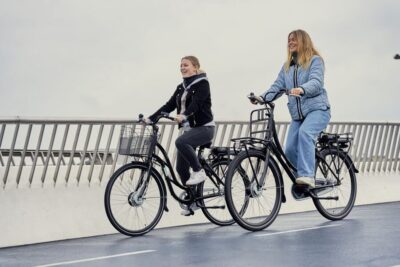
Copenhagen makes city planning feel personal. This three-hour e-bike tour shows how streets, buildings, and public spaces shape daily life, taking you beyond the usual center to old landmarks, new developments, and lesser-known corners. I like the comfortable bikes and the small groups of no more than 10 people. I also like the focus on how Danes actually use their city, not just how it looks in photographs.
The tour costs $84 per person, which is fair if you want context as well as sightseeing. The main caution is pace: one review praised guide Aitik’s storytelling, while another found guide Alex rode too fast and stopped too rarely for photos. You should be comfortable handling a bicycle in an urban setting before booking.
In This Review
- Key points about the Copenhagen city-life ride
- Why this tour shows a different Copenhagen
- Starting beside Nyhavn and getting ready to ride
- Leaving the center for the city beyond the postcards
- Reading Copenhagen through cycling and walking
- Historic landmarks beside modern development
- The value of a maximum-10 group
- E-bikes, helmets, rain, and what to bring
- Is $84 a fair price?
- Who should book this urban design ride?
- Should you book it?
- FAQ
- Where does the Urban Design and Livability E-bike Tour start?
- How long does the tour last?
- What language is the tour in?
- What is included in the price?
- Are food, drinks, or entry tickets included?
- Who cannot join this activity?
Key points about the Copenhagen city-life ride
- Three hours on an easy-to-ride e-bike: You cover more ground than on foot without needing to be a strong cyclist.
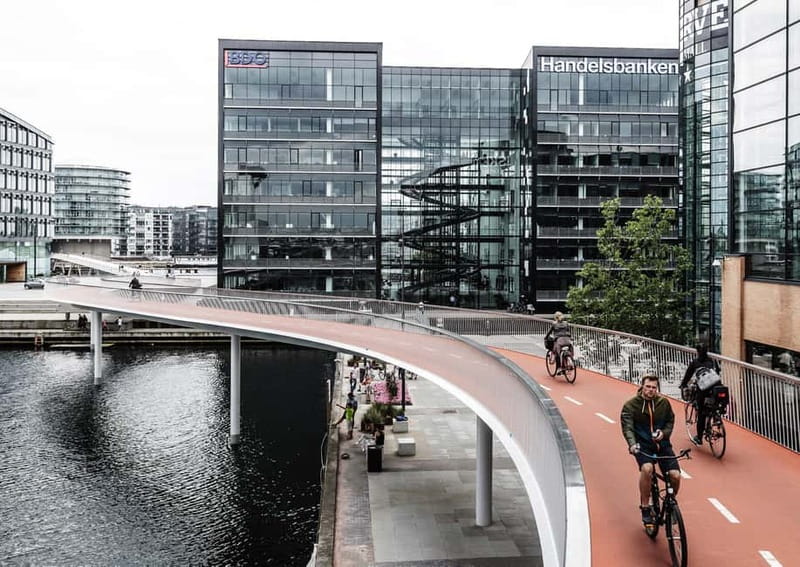
- A look beyond central Copenhagen: The route includes areas outside the main center, with historic landmarks, newer projects, and less obvious places.
- Urban planning is the main story: You learn how cycling, walking, architecture, and public space support everyday life.
- Small groups of up to 10: This gives you a better chance to ask questions and keep track of the guide.
- Central start beside Nyhavn: Check in inside the shop at the corner of Holbergsgade and Peder Skrams Gade.
- Bring your curiosity, and arrive early: You need to be at the shop at least 10 minutes before departure, and the tour runs in English.
Why this tour shows a different Copenhagen
Many Copenhagen tours focus on the postcard center. This one uses the city as its subject. You still see historic places, but the larger question is why Copenhagen works the way it does.
The tour looks at the connection between urban design and daily comfort. Copenhagen has built a city where many people move by bicycle or on foot, and where public spaces encourage people to meet, linger, and take part in city life. That makes the ride useful even if you already plan to see the major sights on your own.
I especially like this approach for a first or second day in town. You begin to notice details that are easy to miss from a bus or walking route: how a road gives space to bicycles, how a square invites people to stop, or how newer buildings fit into older parts of the city.
The subject is not only practical. Architecture, design, city planning, and the Danish idea of hygge all appear during the ride. You get a feel for the Copenhagen way of life rather than a simple list of monuments.
More bike rides in Copenhagen:
- Copenhagen: Highlights 3 Hour Bike Tour with a Local Guide
★ 4.8 · 2,312 reviews - Copenhagen: 3-Hour City Highlights Bike Tour with Guide
★ 4.7 · 1,239 reviews - Copenhagen Highlights 3 Hour Bike Tour with local Guide
★ 5.0 · 1,125 reviews
Starting beside Nyhavn and getting ready to ride
The meeting point is inside the shop on the corner of Holbergsgade and Peder Skrams Gade, close to Nyhavn. Do not wait outside for a guide to find you. Go into the store for check-in, and arrive at least 10 minutes before the scheduled start.
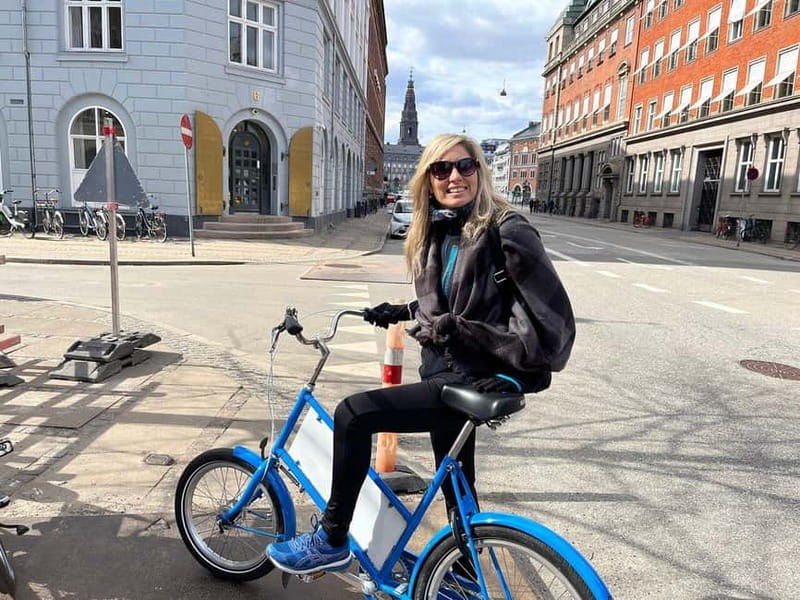
That early arrival matters because the tour has a fixed departure and includes a bike setup. The e-bikes are described as easy to ride, and helmets are available if you want one. You also receive a rain poncho if the weather turns wet.
The bikes should make the three-hour route manageable for most active adults. An electric motor takes some of the strain out of riding, especially when you are more interested in listening and looking than testing your fitness. Still, an e-bike does not remove the need to steer, brake, watch other road users, and stay with the group.
The age rules are clear. The tour is not suitable for children under 10, babies under one, or people over 70. The information does not give a separate accessibility assessment, so you should judge your own comfort with mounting, balancing, and riding before reserving.
Leaving the center for the city beyond the postcards

The route begins near one of Copenhagen’s best-known areas, then moves toward parts of the city outside the main center. That shift is the heart of the tour.
You are not given a fixed public list of every stop, so you should not expect a guaranteed lineup of named buildings or venues. Instead, the route combines old and new city highlights, historic landmarks, modern developments, and less obvious places selected to explain how Copenhagen has changed.
This gives the guide room to make the ride feel connected to the city as it is on the day of your visit. You may pass areas that do not appear on a standard sightseeing route, then hear why a street, building, or public space matters.
The benefit is breadth. In three hours, you can form a useful mental map of Copenhagen and see how different parts of the city relate to one another. The tradeoff is that the tour may feel less predictable than a monument-by-monument route. If you want extended time inside one attraction, this is not the right format. Entry tickets are not included, and the tour does not appear to include visits inside the venues you pass.
Reading Copenhagen through cycling and walking
The best part of this ride is the way it treats transportation as culture. In Copenhagen, bicycles are not simply a fun way for visitors to get around. They are part of ordinary life, and the tour explores how planning has helped make that possible.
As you ride, listen for the link between movement and wellbeing. A city designed for bicycles and pedestrians can make short trips simpler, reduce dependence on cars, and create more chances for people to encounter one another. The tour connects these choices to the physical surroundings, including streets, buildings, and shared public areas.
That explanation gives the bike ride more purpose. You are not only traveling from one sight to the next. You are seeing how the city’s layout affects the way people spend time, travel, and meet.
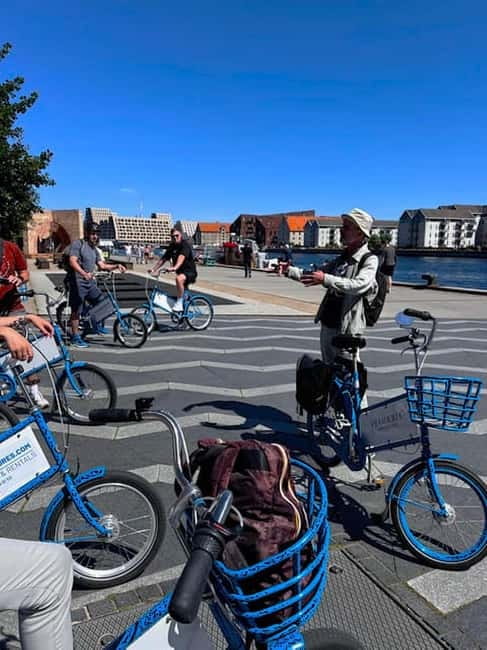
You should ask questions throughout the ride. The guides are encouraged to discuss the subjects raised by the route, and the small group makes conversation easier than it would be on a large coach tour. If you are curious about architecture, public space, Danish customs, or cycling culture, this is where the tour can provide its greatest value.
A completely different kind of day out:
- Copenhagen: Canal Cruise with Guide
★ 4.6 · 9,115 reviews - Copenhagen: Hop-On Hop-Off Bus Tour with Boat Tour Option
★ 3.9 · 4,122 reviews - Private Walking Grand Tour of Copenhagen
★ 5.0 · 3,953 reviews - From Copenhagen: Lund and Malmö 2-Country Tour
★ 4.7 · 2,772 reviews
Historic landmarks beside modern development
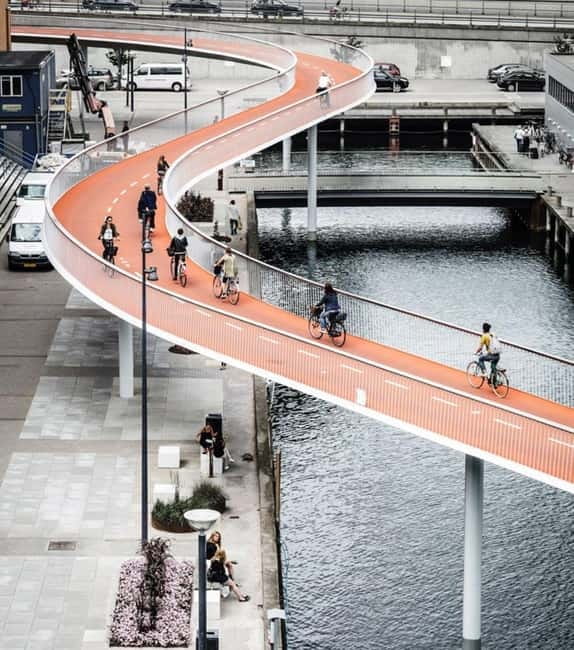
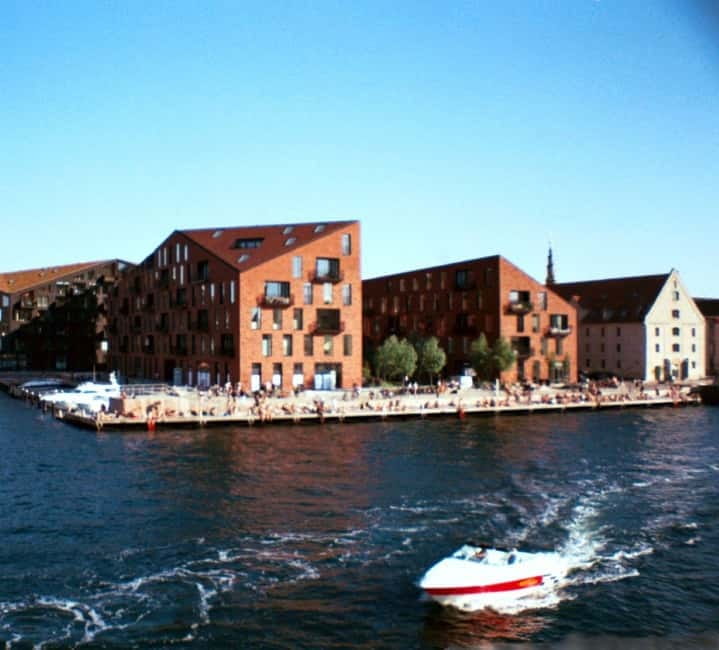
The tour deliberately places older Copenhagen alongside newer parts of the city. That contrast helps explain the city as an ongoing project rather than a preserved museum.
Historic landmarks give you a sense of the city’s earlier form. Modern developments show how Copenhagen is addressing present-day needs and shaping new places for people to live, work, and spend time. The guide’s job is to connect these pieces, pointing out how design choices affect the way an area feels and functions.
You should expect to see places from the outside rather than spend time touring interiors. That keeps the group moving and allows the guide to cover more ground, but it also means you will need separate plans if a particular building or venue interests you.
I find this style especially useful for visitors who want more than a standard photo stop. You get a reason to look at the relationship between old streets and new construction, rather than treating each place as an isolated sight.
The value of a maximum-10 group
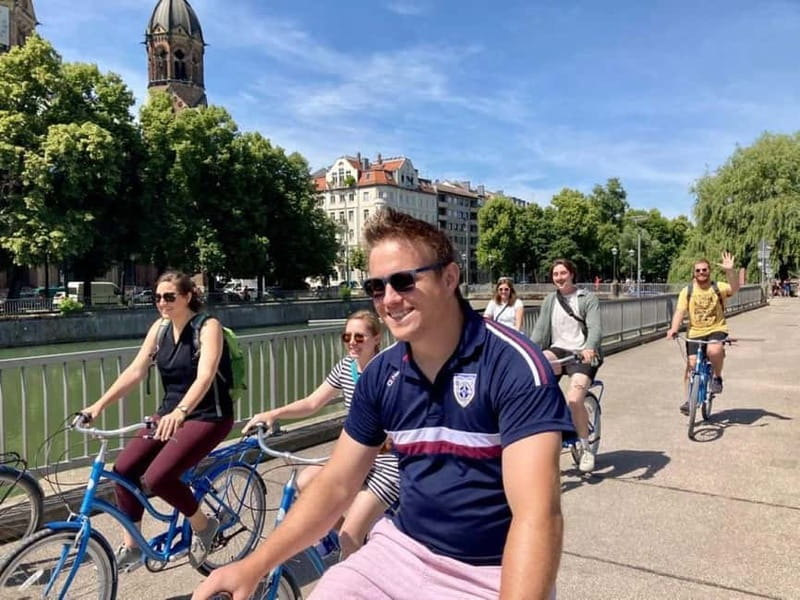
A cap of 10 participants is a real advantage on a bicycle tour. It is easier to hear an English-speaking guide, easier to keep the group together, and easier to ask a quick question without interrupting the whole ride.
A small group also matters when moving through city streets. You still need to pay attention, but the ride should feel less unwieldy than a large procession of bicycles. The guide can respond to questions and keep an eye on the group more effectively.
The feedback on guiding is not completely uniform. Aitik received praise for comfortable bikes and strong storytelling, with particular credit for giving a broad view of Copenhagen and taking the group to places you might not find alone. Another account found Alex’s pace too quick, with too few pauses for photos or simply enjoying an area.
There was also a more serious group-management problem during one ride. A technical issue caused more than half the group to become separated, and the problem was noticed only after some time. It was eventually sorted out, and the tour was still recommended, but the incident is a reminder to stay alert and keep the guide in sight.
My advice is simple: confirm the route and pace at the beginning, signal clearly if you need to stop, and avoid drifting behind the group. This is an urban cycling tour, not a leisurely freewheel with unlimited photo breaks.
E-bikes, helmets, rain, and what to bring
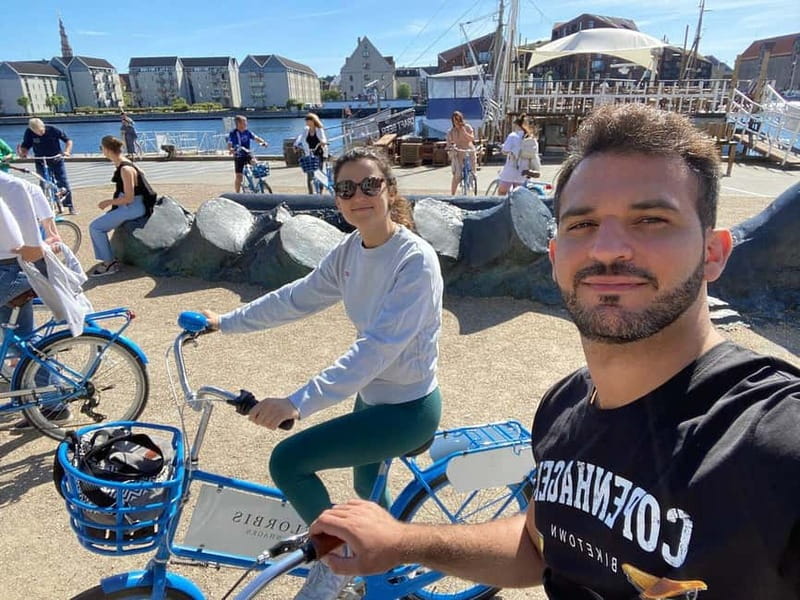
The included e-bike is the main reason the price can make sense. You can travel farther than you would on foot and avoid the effort of a standard bicycle over three hours. The bikes are described as comfortable and mostly easy to ride, but your own cycling ability still matters.
Helmets are optional. If you normally wear one, use the provided helmet. If you do not, remember that the tour still takes place on city streets, so comfortable clothing and sensible shoes are more important than looking dressed up for photographs.
Rain ponchos are available if the weather changes. Food and drinks are not included, so eat beforehand or plan to buy something after the tour. You should also bring a water bottle if you normally need one on a three-hour ride, though the supplied information does not promise refreshments.
Because the route combines listening with riding, avoid carrying anything that makes steering awkward. A small bag is more practical than a large suitcase or loose items that could distract you.
Is $84 a fair price?
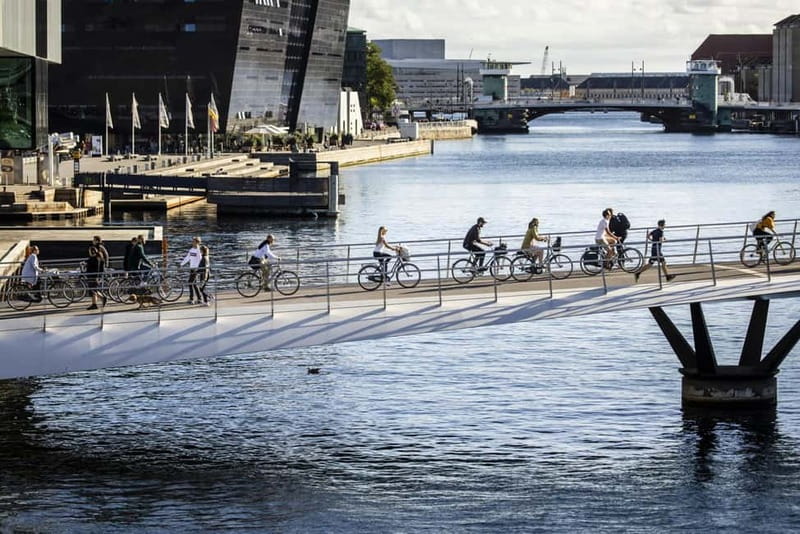
At $84, this is not the cheapest way to see Copenhagen. You can walk around central streets for free, rent a bicycle independently, or use public transportation for less.
The price becomes more reasonable when you count what is included: a three-hour route, an e-bike, an English-speaking guide, a helmet if wanted, rain protection, and a small group. You are paying for local interpretation and for a planned route that connects urban design, architecture, historic places, and modern development.
The strongest value comes if you want to understand the city. A self-guided ride may give you freedom, but it will not necessarily explain why Copenhagen has become known for healthy and sustainable urban living. You also may not find the less obvious areas without doing considerable planning first.
I would be less likely to recommend the price to someone who only wants a fast checklist of famous sights. This tour is built around ideas and observation. Its value depends on whether you enjoy learning how a city operates.
The booking terms help reduce the risk. You can reserve now and pay later, and cancellation is free up to 24 hours before the start for a full refund. Check the available departure times before booking, since the tour lasts three hours and the starting schedule can vary.
Who should book this urban design ride?
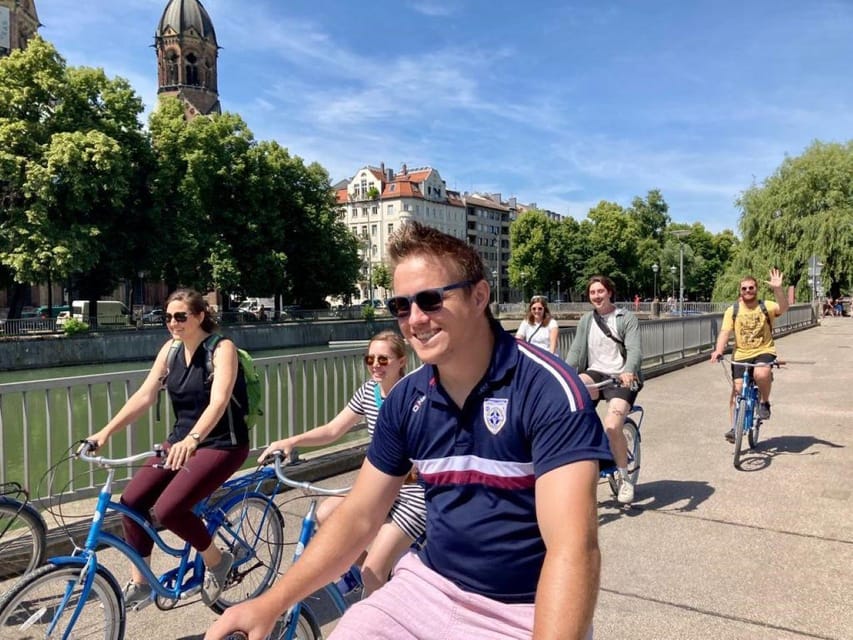
I would recommend it to an adult who can ride confidently, enjoys asking questions, and wants to see Copenhagen through more than its central monuments. It is also a good choice if you are interested in architecture, public space, cycling policy, sustainability, or the everyday meaning of hygge.
It suits a first visit because it gives you a wider sense of the city early in your stay. It also suits a return visit because the route focuses on areas and ideas you may have missed before.
You may want to skip it if you dislike cycling in an urban setting, need frequent unscheduled breaks, or prefer indoor sightseeing. The tour does not include food, drinks, or entry to venues, and one account found the pace too quick for relaxed photography.
Families should pay close attention to the age rules. Children under 10 cannot join, babies under one are not suitable, and the activity is not suitable for people over 70. The group size is small, but the tour still requires active participation for three hours.
Should you book it?
Book this tour if you want Copenhagen explained through its streets, bikes, buildings, and public spaces. The comfortable e-bikes, compact group, and thoughtful subject matter give you more than a standard city ride, and Aitik’s reported storytelling suggests how engaging a strong guide can make it.
Think twice if you need a slow photo tour or are not fully comfortable on a bicycle. The reported pace issue and the temporary group separation show why bike handling and attention matter.
For the right rider, $84 buys a useful introduction to the city’s design choices and daily habits. You finish back at the original shop near Nyhavn, with a better sense of why Copenhagen feels so carefully made for people.
FAQ
Where does the Urban Design and Livability E-bike Tour start?
It starts inside the shop on the corner of Holbergsgade and Peder Skrams Gade, next to Nyhavn. You should go inside the store for check-in.
How long does the tour last?
The tour lasts three hours. Starting times vary, so check availability when booking.
What language is the tour in?
The live tour guide speaks English, and English is the listed tour language.
What is included in the price?
The price includes an easy-to-ride e-bike, an expert guide, optional helmets, and rain ponchos in case of rain.
Are food, drinks, or entry tickets included?
No. Food and drinks are not included, and you must pay separately for entry tickets to any venues seen during the tour.
Who cannot join this activity?
The tour is not suitable for children under 10, babies under one year, or people over 70. You should also be comfortable handling a bicycle in an urban setting.
Just added in Copenhagen
- WWII Copenhagen Nyhavn and War Museum Private Walking Tour★ 5.0 · 2 reviews
- a day at North Zealand Castle Tour★ 4.5 · 19 reviews
- Copenhagen Walking Tour with Food Testing (smorrebrod dish & snap)★ 4.5 · 10 reviews
- World-class street football experience in Copenhagen★ 5.0 · 1 review
- walking tour – Copenhagen and Christiansborg 3 hours★ 4.0 · 7 reviews
- Stevns Klint UNESCO World Heritage Site Tour from Copenhagen★ 5.0 · 1 review
- The Philosopher’s Last Walk: An audio tour on the life of Søren Kierkegaard★ 4.5 · 5 reviews
- The Six Forgotten Giants Trolls Hunt with Minibus★ 4.5 · 27 reviews
E-Bikes, compared.



Private E-Biking Copenhagen History and Nature Adventures
Read our review →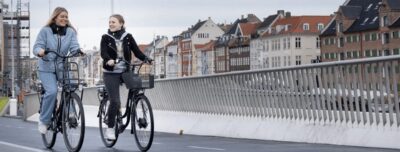
Browse the lists this tour appears in