
Reviewed · COPENHAGEN
The Art of Baking Danish Pastry
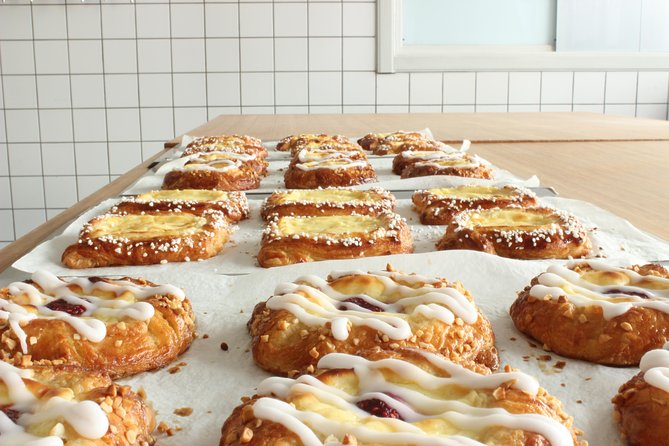
Fresh pastries beat another museum morning. This three-and-a-half-hour baking class in Frederiksberg gives you a hands-on taste of Danish food culture, not just a pastry on a café plate. I like the small maximum of 12 people and the generous amount of baking you take home. The main drawback is simple: you will make far more than you can eat in one sitting.
The 9:00 a.m. start leaves your afternoon open for Copenhagen sightseeing, while Chef Frederik Terrible keeps the class moving with clear instructions, humor, and practical help. I also like that the recipes arrive by email afterward, so the class can continue in your own kitchen. You need to listen closely, though, since the directions can come quickly during the hands-on stages.
In This Review
- Key points to know before booking
- Why Danish pastry is worth a morning in Copenhagen
- Getting to Grundtvigsvej 10A in Frederiksberg
- Inside the Terrible French Pastry School
- Kneading, rolling, and folding the dough
- Making cinnamon rolls and Spandauer pastries
- Poppy seed and sesame twists with marzipan
- Coffee, tasting, and two boxes of pastries
- Recipes that follow you home
- Is $117.23 a fair price?
- Who will enjoy this class most?
- Should you book The Art of Baking Danish Pastry?
- FAQ
- Where does The Art of Baking Danish Pastry take place?
- What time does the class start?
- How long does the baking class last?
- Is the class offered in English?
- How many people can join the class?
- What pastries will I make?
- Do I get to take pastries home?
- Are recipes provided after the class?
- Can I cancel for a refund?
Key points to know before booking
- You make several Danish pastries yourself: The menu includes cinnamon rolls, Spandauer Danish pastries, and poppy seed and sesame seed twists, with some sessions producing four types in total.
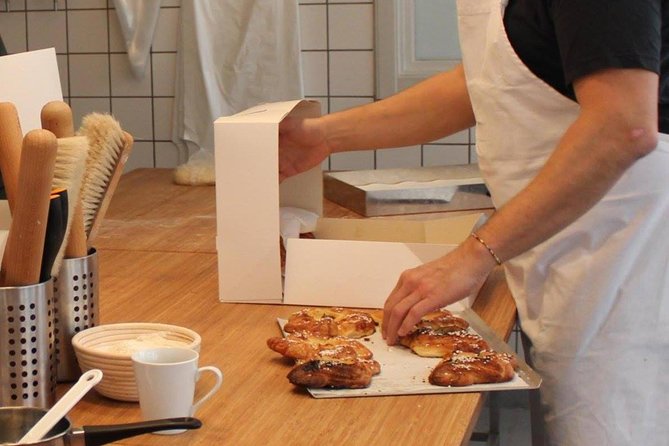
- The class is unusually generous: You may leave with roughly a dozen pastries per person, or even around 36 pastries for a group of three.
- Chef Frederik Terrible teaches with structure and humor: His approach is patient and direct, which helps first-time bakers keep pace.
- The morning schedule works well for sightseeing: Class begins at 9:00 a.m. and ends back at the meeting point after about three and a half hours.
- This is a small-group experience: A maximum of 12 people gives you a better chance to receive help than you would in a large demonstration.
- Bring a plan for the leftovers: Two boxes of pastries are common, so sharing with friends, family, or hotel staff may be necessary.
Why Danish pastry is worth a morning in Copenhagen
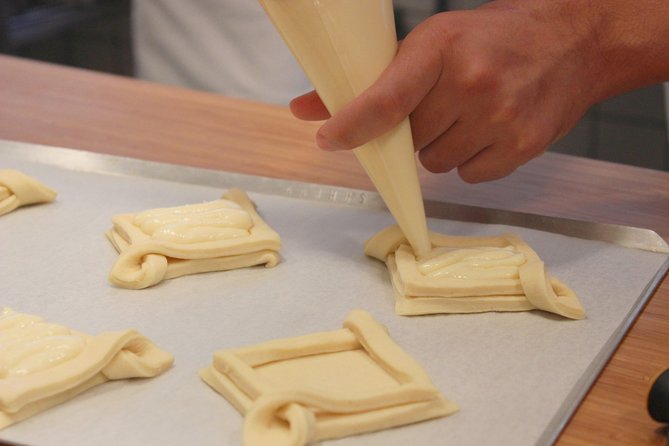
Danish pastry is more than a sweet breakfast item. It depends on careful handling of dough, layers, folds, fillings, shaping, and timing. In a bakery window, those steps disappear behind the finished spiral or golden pocket.
This class lets you see how the pastries come together. You learn by working with the dough yourself, which makes the final bite more rewarding and gives you a better chance of repeating the process at home.
I especially like the balance between instruction and action. You are not expected to sit quietly while a chef performs everything in front of you. Chef Frederik first demonstrates the basic movements, then you work through them with his help.
That format suits beginners. You do not need to arrive as an experienced baker, and the class is still useful if you already know your way around a kitchen. One participant with professional cooking experience found the recipes and extra suggestions useful, while first-time bakers praised the clear preparation and step-by-step format.
More cake and pastry stops in Copenhagen:
- Copenhagen: Best of Danish Pastry Tasting Tour
★ 4.8 · 414 reviews - Copenhagen: Danish Pastry Crawl with Private Guide
★ 4.9 · 46 reviews
Getting to Grundtvigsvej 10A in Frederiksberg
The class meets at Grundtvigsvej 10A, 1864 Frederiksberg, west of Copenhagen’s city center. Frederiksberg is easy to reach by public transportation, and the activity is listed as being near transit.
Allow extra time to find the entrance. The front door can be confusing because map applications may direct you to the wrong side of the street. One practical report describes using bus 31, followed by some walking, but the supplied details do not promise a specific route for every date.
I would aim to arrive early rather than cutting it close. The class starts at 9:00 a.m., and the dough work follows a set sequence. One late-arriving participant was able to catch up, but arriving on time will make your morning calmer and help you follow the first demonstration.
The meeting point is also the ending point. That makes the class easier to plan around, especially if you want to continue exploring Copenhagen afterward.
Inside the Terrible French Pastry School
The named stop is the Terrible French Pastry School, the setting for the full workshop. This is not a city tour with several sightseeing stops. You spend the morning in one baking space, learning and producing pastries from start to finish.
The small-group limit matters here. With no more than 12 people, the chef can move around the room, check your work, and correct problems as they happen. Baking dough is less forgiving than watching a cooking demonstration, so that personal attention has real value.
Chef Frederik Terrible is repeatedly praised for being organized, funny, patient, and firm when needed. That combination is useful in a class where everyone must complete the same steps at about the same time. His humor keeps the mood relaxed, but the instructions still need your full attention.
The pace is active. You will not spend much time waiting around, and three and a half hours can pass quickly because the class stays busy. If you prefer a slow, leisurely tasting with little participation, this is not the right pick. If you want to use your hands and learn a practical skill, it fits well.
Kneading, rolling, and folding the dough
The first part covers the basic pastry techniques. You follow a demonstration of kneading, rolling, and folding before beginning your own work.
These are the foundations of laminated pastry. The class does not simply hand you a finished piece of dough and ask you to add filling. You get a look at the movements that affect texture and shape, then practice them yourself.
Listen carefully during this part. Several people found Chef Frederik’s instructions easy to follow, but one useful caution is that he can speak quickly while explaining the next step. If you are unsure, ask at once rather than trying to guess after the dough has been shaped.
The class appears designed to help novices succeed. Preparation and organization reduce unnecessary confusion, and the chef checks on each person as the work continues. You should still expect to concentrate. Good pastry rewards careful handling.
A completely different kind of day out:
- Copenhagen: Canal Cruise with Guide
★ 4.6 · 9,115 reviews - Copenhagen: Hop-On Hop-Off Bus Tour with Boat Tour Option
★ 3.9 · 4,122 reviews - Private Walking Grand Tour of Copenhagen
★ 5.0 · 3,953 reviews - From Copenhagen: Lund and Malmö 2-Country Tour
★ 4.7 · 2,772 reviews
Making cinnamon rolls and Spandauer pastries
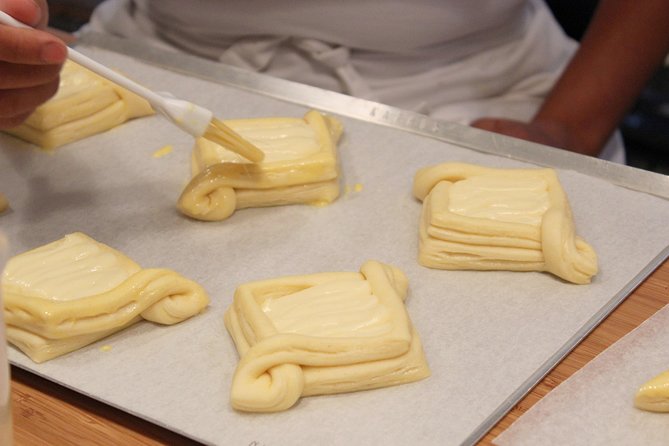
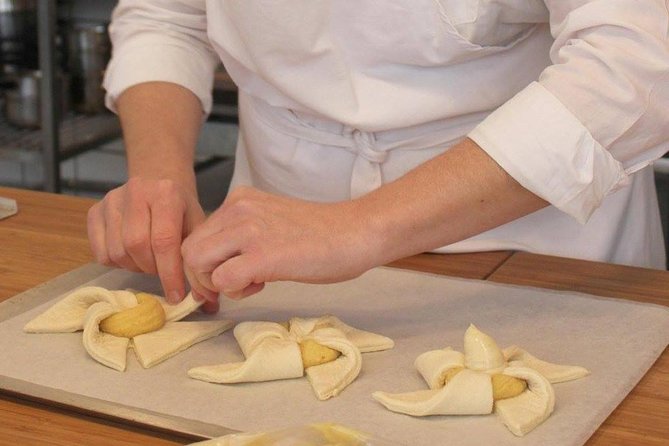
The sample menu includes kanelsnegle, the Danish cinnamon roll, and Spandauer, a classic Danish pastry style. These give you two different ways to work with the dough and filling.
Cinnamon rolls are familiar enough to feel approachable, but the Danish version is a good test of shaping and layering. You get to see how a simple-looking pastry depends on the dough work done earlier.
Spandauer pastries add variety. Their shape and filling make them look different from the rolled cinnamon pastry, so the class is not simply repeating one recipe several times. You learn how the same broad pastry skills can produce different finished forms.
The hands-on format is the real advantage. You are not only tasting the finished pastries with coffee. You are learning how to portion, shape, and prepare them for baking, with the chef offering corrections along the way.
Poppy seed and sesame twists with marzipan
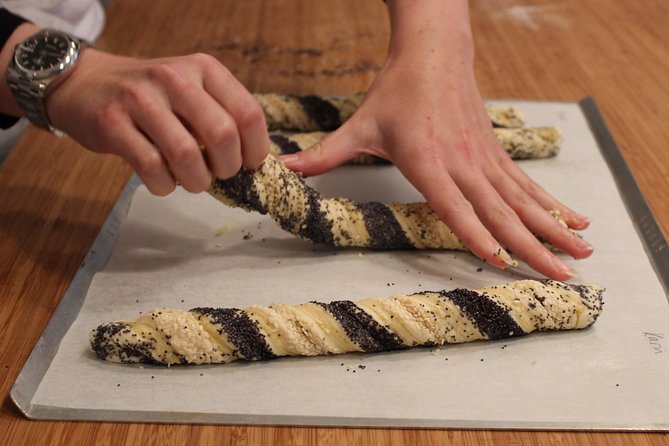
The poppy seed and sesame seed twists, called frøsnapper, are another highlight of the menu. Some batches also include marzipan, which adds a sweet almond note and gives the pastry a strong following among the class creations.
The twist shape makes this a useful contrast to the cinnamon roll and Spandauer. It also gives you another chance to practice working evenly with the dough and filling.
This is one of the pastries I would pay close attention to if you enjoy nutty, seeded flavors. The class gives you more than one style of Danish baking, so you can compare the textures and fillings rather than leaving with a box of near-identical treats.
The exact selection may change during the year. A participant noted that the pastries appear to shift seasonally, so the sample menu should guide your expectations without being treated as a permanent promise of every session.
Coffee, tasting, and two boxes of pastries
Once the pastries have baked, tea and coffee are served, and you taste what you made. This gives the class a pleasant finish, but it is also where you may discover the practical challenge: the output is large.
Several accounts describe leaving with two full boxes. Another estimates about 12 pastries per person, while a group of three took home around 36 pastries. The precise amount can depend on the day’s menu and group, but you should plan for a serious supply of baked goods.
That quantity is excellent value if you are traveling with family or friends. You can share the pastries back at your hotel or give them to people at home. It is less convenient if you are flying soon, staying in a small room, or already overloaded with food souvenirs.
One person specifically wished the class had been scheduled earlier in the visit. That is sound advice. If you take the class near the start of your Copenhagen stay, you have more time to eat the pastries. If you book it on your last day, you can still carry them home, but you may need to share most of the box.
The final tasting also gives you a chance to judge your own work. The pastries are not just practice pieces destined for the bin. You get to eat the results and take the rest with you.
Recipes that follow you home

The recipes used in class are emailed afterward. This is one of the best parts of the experience because the real value of a baking class comes after the holiday.
Without written instructions, techniques learned during a busy morning can fade quickly. The emailed recipes give you a reference when you try the pastries again at home. Additional recipe ideas may also be included, giving you more ways to continue practicing.
I would save the email in more than one place and make notes during class about anything that feels especially important. The recipe can list ingredients and method, but your memory of how Chef Frederik handled the dough may be just as useful.
This feature also makes the class a good choice for people who want a lasting souvenir. You still receive the baked goods, but you also take home a skill and a set of instructions.
Is $117.23 a fair price?
At $117.23 per person, this is not a cheap breakfast. It is also more than the price of buying several pastries in a Copenhagen bakery.
The comparison is not quite fair, though. The fee covers about three and a half hours of instruction, hands-on production, a small group capped at 12 people, tea or coffee, several pastries, and emailed recipes. You are paying for an activity, a meal, and a take-home food gift in one package.
The value is strongest if you are interested in baking or food culture. You get direct access to a professional pastry chef and enough output to share. A couple or small family group can turn the morning into a social activity, then continue with sightseeing after lunch.
The value is weaker if you only want to sample Danish pastry. Copenhagen has many bakeries where you can buy a cinnamon roll for much less. You should book this class for the making, teaching, and recipes, not simply for the final taste.
It is also worth remembering the strict booking terms. The experience is non-refundable and cannot be changed after booking for any reason. If the minimum number is not reached and the provider cancels, you will be offered another date or experience, or receive a full refund.
Who will enjoy this class most?
I would recommend it most strongly to food lovers, home bakers, couples, families, and friends who want a shared activity. It also suits people who like bringing home an edible souvenir instead of another small object.
Beginners should feel comfortable signing up. The teaching is designed around demonstration and guided practice, and the chef checks in as you work.
Experienced cooks can enjoy it too, especially if Danish pastry is outside their usual baking routine. One professional cook found the recipes useful, and the class offers a chance to compare methods with a pastry specialist.
You should think twice if you dislike fast-paced instruction, hands-on work, or carrying food around for the rest of the day. You also need to be ready for a large quantity of pastries and a firm no-refund policy.
The English-language format makes the class accessible to international visitors. Since it begins in the morning, you can fit it into a short Copenhagen stay without giving up an entire sightseeing day.
Should you book The Art of Baking Danish Pastry?
Book it if you want to make Danish pastry, not just eat it. The strongest reasons are the small group, Chef Frederik Terrible’s clear and good-humored teaching, the large take-home supply, and the recipes sent afterward.
I would schedule it early in your Copenhagen visit if possible. That gives you time to enjoy the pastries before departure and reduces the problem of transporting several boxes home.
If your idea of a perfect morning is a quiet café breakfast, choose a bakery instead. If you want an active, useful, and very edible introduction to Danish baking, this is one of the better-value food activities in Copenhagen, provided you arrive on time and have a plan for the leftovers.
FAQ
Where does The Art of Baking Danish Pastry take place?
The class takes place at the Terrible French Pastry School, at Grundtvigsvej 10A, 1864 Frederiksberg, Denmark.
What time does the class start?
The class starts at 9:00 a.m.
How long does the baking class last?
The activity lasts approximately three hours and 30 minutes.
Is the class offered in English?
Yes. The experience is offered in English.
How many people can join the class?
The maximum group size is 12 people.
What pastries will I make?
The sample menu includes cinnamon rolls called kanelsnegle, Spandauer Danish pastries, and poppy seed and sesame seed twists called frøsnapper. The pastry selection may change during the year.
Do I get to take pastries home?
Yes. The class produces a large amount of pastry, often enough for roughly a dozen pieces per person or two full boxes for some groups.
Are recipes provided after the class?
Yes. The recipes used during the class will be emailed to you afterward.
Can I cancel for a refund?
No. The experience is non-refundable and cannot be changed for any reason. If the provider cancels because the minimum number of participants is not reached, you will be offered another date or experience, or a full refund.
Just added in Copenhagen
- WWII Copenhagen Nyhavn and War Museum Private Walking Tour★ 5.0 · 2 reviews
- a day at North Zealand Castle Tour★ 4.5 · 19 reviews
- Copenhagen Walking Tour with Food Testing (smorrebrod dish & snap)★ 4.5 · 10 reviews
- World-class street football experience in Copenhagen★ 5.0 · 1 review
- walking tour – Copenhagen and Christiansborg 3 hours★ 4.0 · 7 reviews
- Stevns Klint UNESCO World Heritage Site Tour from Copenhagen★ 5.0 · 1 review
- The Philosopher’s Last Walk: An audio tour on the life of Søren Kierkegaard★ 4.5 · 5 reviews
- The Six Forgotten Giants Trolls Hunt with Minibus★ 4.5 · 27 reviews