Reviewed · GUIDED
Odense: Guided tour guide in Spanish
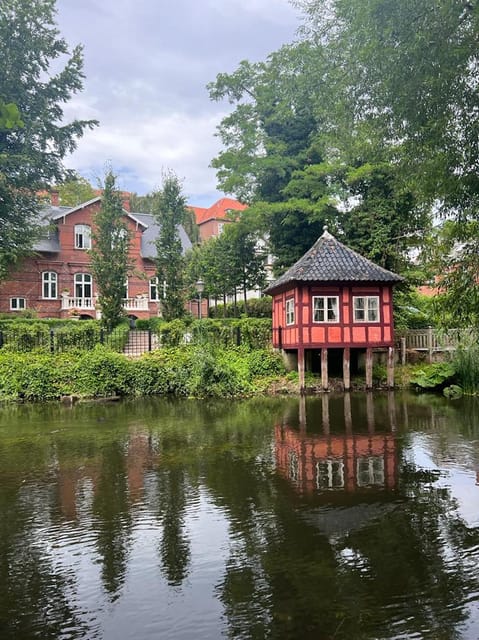
Vikings and fairy tales share one small city. This Odense tour brings together Nonnebakken, the 10th-century fortress linked to King Harald Bluetooth, and the streets connected with Hans Christian Andersen. I like that the route mixes archaeology, literature, and church architecture instead of treating Odense as only the birthplace of a famous writer. I also like the Spanish guide, which makes the city easier to understand if you prefer touring in Spanish. The main caution is that the details conflict slightly: the activity is described as three hours, while the itinerary also mentions a four-hour guided tour, and the accessibility information is not consistent.
The meeting point is simple: the main gate of Odense Central Station at Østre Stationsvej 33. That is useful if you arrive by train or need a clear place to find the guide. You should wear comfortable shoes and bring rain gear, since parts of the experience take place outdoors.
In This Review
- Key points to know before booking
- Starting at Odense Central Station
- Nonnebakken and the Viking foundations of Odense
- Møntergården Museum and regional Viking life
- Walking through Hans Christian Andersen’s Odense
- St. Canute’s Cathedral and Odense’s Gothic center
- Why the Spanish guide changes the experience
- Is the $118 price good value?
- Who will enjoy this Odense tour most?
- What to confirm before you book
- Should you book the Odense guided tour?
- FAQ
- Where does the Odense tour begin?
- Where does the tour end?
- Is the tour available in Spanish?
- How long does the tour last?
- What should I bring?
- Can I cancel for a refund?
Key points to know before booking
- Nonnebakken connects Odense to the Viking age: Explore the remains of a 10th-century fortress built under King Harald Bluetooth.
- Møntergården adds local context: The museum presents Viking life in the region and gives the archaeological story more shape.
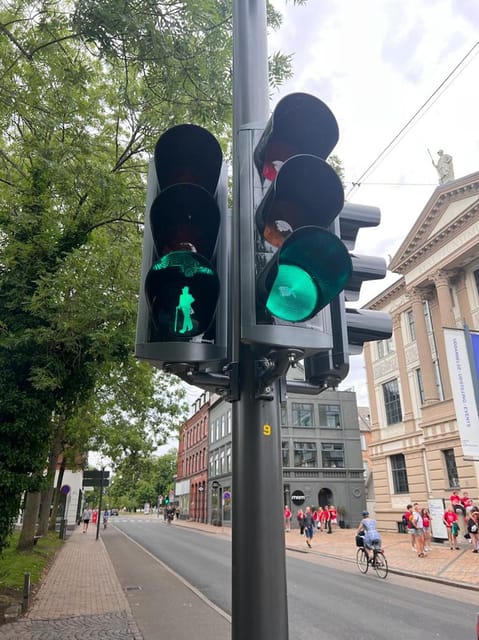
- Hans Christian Andersen is treated as more than a name: Interactive museums and city streets connect the writer’s life with the place that inspired his work.
- St. Canute’s Cathedral changes the mood: Its Gothic architecture adds a grand religious and historical stop to the walking route.
- Spanish is the main advantage: A live guide is available in Spanish and English, with content sometimes presented in its original language.
- Check the timing and mobility details: The main description says three hours, but another section says four, while the accessibility notes give conflicting information.
Starting at Odense Central Station

The tour begins at the main gate of Odense Central Station, listed at Østre Stationsvej 33. This is a practical meeting point because you do not need to search through a maze of side streets before the tour starts.
If you are arriving from another part of Denmark, the station also gives you a natural place to begin and end the experience. The route returns to the same location, which helps if you have onward transport or want to leave luggage arrangements until after the tour.
The published duration is three hours, but one itinerary line describes a four-hour guided tour. That difference matters. Three hours allows a focused city walk with several major stops. Four hours gives the guide more room for explanations and museum time. I would confirm the exact start and finish time before paying, especially if you have a train reservation, lunch booking, or another activity planned.
The guide is available in Spanish and English. If Spanish is your preferred language, this is the clearest reason to choose this experience over exploring Odense alone. A city guide can connect the fortress, museum, writer, and cathedral into one story instead of leaving you with separate facts.
A few more options to weigh up in Copenhagen
- Copenhagen: Canal Cruise with Guide
★ 4.6 · 9,115 reviews - Copenhagen: Highlights 3 Hour Bike Tour with a Local Guide
★ 4.8 · 2,312 reviews - Copenhagen Sightseeing Classic Canal Tour With Live Guide
★ 4.5 · 1,906 reviews
Nonnebakken and the Viking foundations of Odense
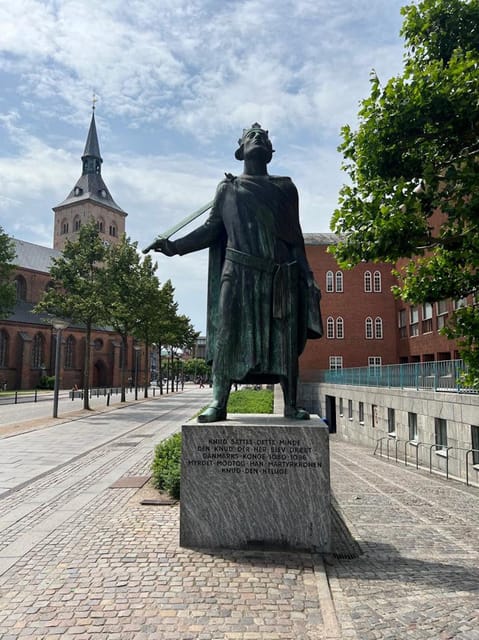
Nonnebakken is the tour’s oldest historical stop. It was a Viking settlement and fortress from the 10th century, built under King Harald Bluetooth. That gives Odense a far older identity than its association with Hans Christian Andersen suggests.
You will not be looking only at medieval streets and literary souvenirs. Nonnebakken points back to a time when Odense was tied to royal power and Viking settlement. The site helps explain why the city matters in the wider story of Denmark.
The value here depends heavily on the guide. Archaeological remains can be difficult to read without help. A good explanation can show you what the fortress represented, how it fitted into the region, and why a 10th-century stronghold still matters today. Since the tour is in Spanish or English, you can ask questions and follow the historical thread without relying on a guidebook.
I would keep expectations realistic. The supplied information identifies Nonnebakken as an ancient fortress and Viking settlement, but it does not promise reconstructed buildings, staged demonstrations, or a large open-air museum. Think of this stop as a chance to understand the site and its place in Odense’s past, not as a theme-park version of Viking life.
Møntergården Museum and regional Viking life
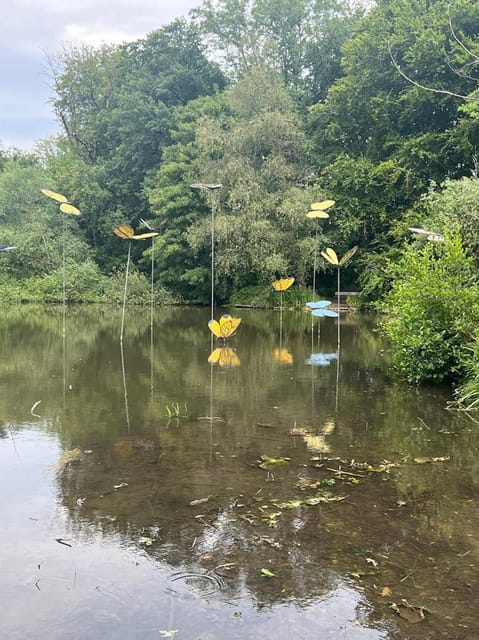
Møntergården Museum adds detail to the Viking section of the tour. While Nonnebakken gives you the important site, the museum helps explain how people lived in the region.
This pairing is one of the strongest parts of the experience. You first encounter the remains of a fortress, then move toward objects and displays that make everyday life easier to picture. The result is more useful than visiting an archaeological location on its own.
The museum is also a good point for families. Children often need more than a name and a date to stay interested, and a museum setting can make the Viking period easier to grasp. The tour description specifically presents the experience as suitable for the whole family, though the pace may still depend on the group and the guide.
The available information does not specify how long you spend inside Møntergården or identify particular exhibits. That means you should see it as part of a guided overview rather than a full museum visit. If Viking history is your main reason for coming to Odense, you may want extra time to return independently after the tour.
Walking through Hans Christian Andersen’s Odense
The tour then shifts from fortress walls and Viking life to Hans Christian Andersen. This change is what gives the route its unusual character. Odense is presented not just as the writer’s birthplace, but as a city whose streets connect with his life and stories.
You will stroll through streets associated with Andersen and learn how the setting influenced the world of his fairy tales. The appeal is not simply taking photos in front of a famous name. It is seeing how a real city can become part of a writer’s imagination.
I like this part because it puts literature in a physical setting. Instead of discussing Andersen only inside a museum, you move through the urban spaces connected with him. That makes the literary story easier to remember.
The tour also includes unique interactive museums devoted to Andersen’s life and work. Interactive displays can make his career more approachable, especially for families or anyone who knows the fairy tales but not much about the author himself.
The information does not name the museums or explain which interactive features they contain. You should therefore expect a guided introduction rather than a guaranteed list of specific installations. Museum access and time inside each location may also depend on the schedule, so confirm what is included if Andersen is your top priority.
A completely different kind of day out:
- Copenhagen: Hop-On Hop-Off Bus Tour with Boat Tour Option
★ 3.9 · 4,122 reviews - Private Walking Grand Tour of Copenhagen
★ 5.0 · 3,953 reviews - From Copenhagen: Lund and Malmö 2-Country Tour
★ 4.7 · 2,772 reviews - Copenhagen Highlights Walking Tour
★ 5.0 · 2,324 reviews
St. Canute’s Cathedral and Odense’s Gothic center
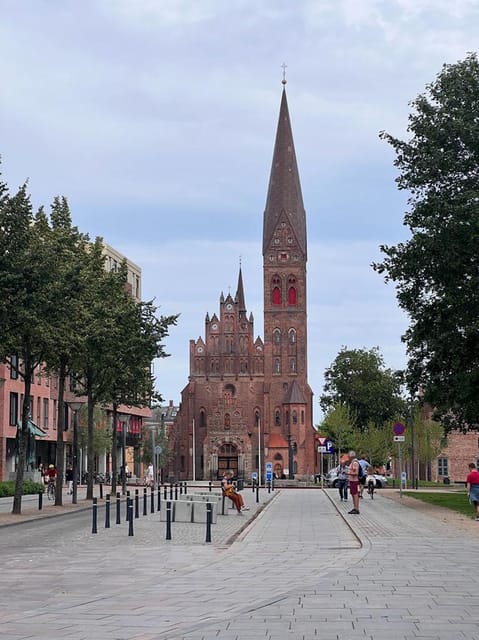
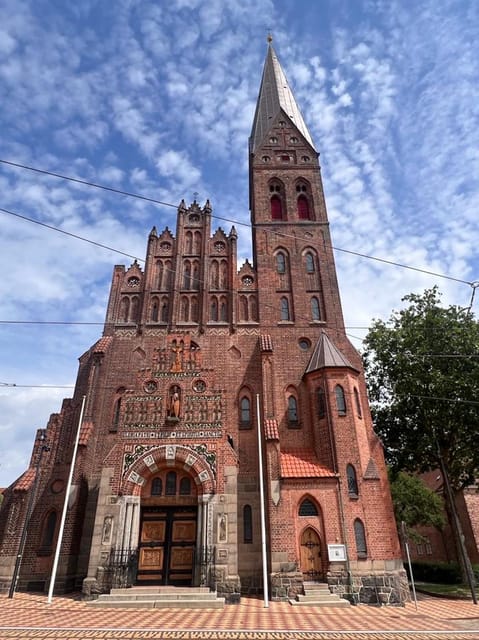
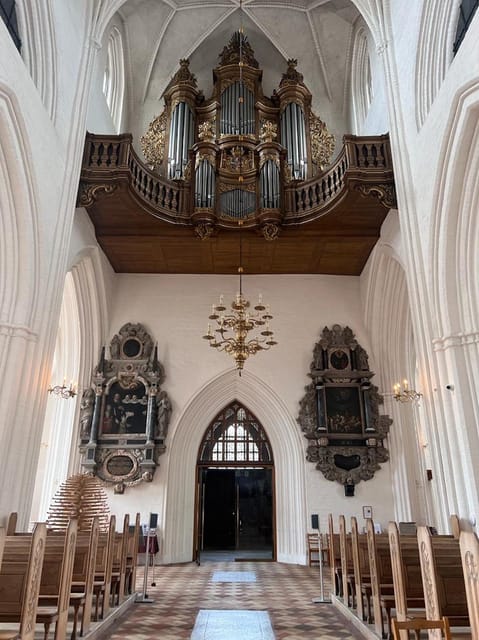
St. Canute’s Cathedral, also called the Cathedral of San Canuto in the tour information, provides a strong architectural finish. Its Gothic design gives the route a different mood from the Viking site and Andersen museums.
The cathedral is described as an imposing jewel of Gothic architecture. That points to a major building rather than a minor sightseeing stop. Even if you are not especially interested in religious history, Gothic architecture offers a clear visual contrast with the city’s older Viking story and its modern literary identity.
This stop also helps broaden the experience. You are not spending three hours on a single theme. Odense appears here as a city shaped by several periods: Viking power, Christian architecture, and modern appreciation of a world-famous author.
The tour information does not state whether there is a formal interior visit, a special service, or a detailed cathedral presentation. Your guide should explain what you can see during the scheduled visit. If entering the cathedral is essential to you, ask for clarification before booking.
Why the Spanish guide changes the experience
A Spanish-speaking guide is more than a language convenience. It affects how much history you can take in during a short tour.
The route covers several subjects that can become confusing when presented as isolated stops. Harald Bluetooth, Nonnebakken, Møntergården, Andersen, and St. Canute’s Cathedral belong to different periods and themes. A guide can show you how they fit together and help you remember the city as one place with several identities.
The activity lists both Spanish and English as guide languages. It does not provide a guide’s name, so there is no particular person to request. If you need the tour entirely in Spanish, confirm the language for your chosen departure rather than assuming every departure uses Spanish.
Some content is shown in its original language. That may matter inside museums or historic settings. Ask the guide for an explanation when needed, since the activity specifically provides live guidance in Spanish and English.
Is the $118 price good value?
At $118 per person, this is not a bargain-priced city stroll. The value depends on what you want from your time in Odense.
The price makes more sense if you want several subjects handled in one organized visit: Viking heritage, Møntergården Museum, Hans Christian Andersen, interactive literary museums, city streets, and St. Canute’s Cathedral. A Spanish-speaking guide also adds value if you would otherwise struggle to follow detailed explanations in English or Danish.
The price is less attractive if you mainly want to walk around central Odense at your own pace. The published information does not clearly state whether museum admission fees are included, and it does not give a group size. Those details can affect the real value. Ask what the $118 covers beyond the guide before booking.
The short duration is another factor. A three-hour tour gives you a useful introduction, but it cannot provide a long visit at every museum and historic site. You are paying for a compact overview and a guide’s interpretation, not an entire day of museum exploration.
There is some flexibility in the booking terms. You can reserve now and pay later, and cancellation is allowed up to 24 hours before the activity for a full refund. That helps if your Odense plans may shift, though you should still check the final booking conditions before confirming.
Who will enjoy this Odense tour most?
I would recommend this experience to someone who wants a clear first look at Odense and prefers guided sightseeing in Spanish. It suits families who want a mix of stories, museums, architecture, and outdoor stops rather than a single long museum visit.
It also fits visitors with a strong interest in Hans Christian Andersen who want more than a literary museum. The walk through streets linked with his life gives the writer a physical setting, while the interactive museums add a more direct look at his work.
History fans may appreciate the contrast between Nonnebakken and Møntergården. The first gives you the fortress story, while the second helps explain Viking life in the region.
This tour may not suit you if you want a slow, highly detailed museum day, a private guide, or a fully confirmed wheelchair-friendly route. The activity says it is wheelchair accessible in one section, but another section says it is not suitable for wheelchair users or people with mobility impairments. That contradiction needs clarification before booking.
You should also be ready for outdoor walking. Comfortable shoes, warm shoes, comfortable clothing, and rain gear are all recommended. Danish weather can change quickly, so outdoor clothing is sensible even when the forecast looks friendly.
What to confirm before you book
A few details deserve a quick check with the provider, Copenhague Que Ver:
- Is the actual tour three hours or four hours?
- Is the selected departure conducted in Spanish, or is English also used?
- Are the museum entrance fees included in the $118 price?
- What group size should you expect?
- Does wheelchair accessibility apply to the full route, or only certain locations?
- Can the cathedral and museums be entered during the scheduled visit?
These questions are not minor. They tell you whether the tour matches your schedule, budget, language needs, and mobility requirements.
Should you book the Odense guided tour?
Book it if you want one guided route linking Viking Odense, Andersen’s literary world, and Gothic architecture. The Spanish guide is the biggest practical advantage, and the mix of Nonnebakken, Møntergården, Andersen museums, city streets, and St. Canute’s Cathedral gives you a useful introduction to the city.
I would hesitate if $118 feels high for a short tour or if you want lengthy museum visits. I would also confirm the duration and accessibility information before booking, since both points are presented inconsistently.
For a first visit, especially with Spanish-language guidance, this tour offers a focused way to get your bearings and understand why Odense is more than Andersen’s birthplace. Just treat it as an overview, then return on your own to the museum or historic site that captures your interest most.
FAQ
Where does the Odense tour begin?
It begins at the main gate of Odense Central Station, at Østre Stationsvej 33.
Where does the tour end?
The tour returns to Østre Stationsvej 33.
Is the tour available in Spanish?
Yes. A live guide is available in Spanish and English. Some content is shown in its original language.
How long does the tour last?
The main activity information lists a duration of three hours. Another itinerary detail mentions a four-hour guided tour, so confirm the exact duration before booking.
What should I bring?
Bring comfortable shoes, rain gear, comfortable clothing, outdoor clothing, and warm shoes.
Can I cancel for a refund?
Yes. You can cancel up to 24 hours in advance for a full refund. The activity also allows you to reserve now and pay later.
Just added in Copenhagen
- WWII Copenhagen Nyhavn and War Museum Private Walking Tour★ 5.0 · 2 reviews
- a day at North Zealand Castle Tour★ 4.5 · 19 reviews
- Copenhagen Walking Tour with Food Testing (smorrebrod dish & snap)★ 4.5 · 10 reviews
- World-class street football experience in Copenhagen★ 5.0 · 1 review
- walking tour – Copenhagen and Christiansborg 3 hours★ 4.0 · 7 reviews
- Stevns Klint UNESCO World Heritage Site Tour from Copenhagen★ 5.0 · 1 review
- The Philosopher’s Last Walk: An audio tour on the life of Søren Kierkegaard★ 4.5 · 5 reviews
- The Six Forgotten Giants Trolls Hunt with Minibus★ 4.5 · 27 reviews
Guided, compared.

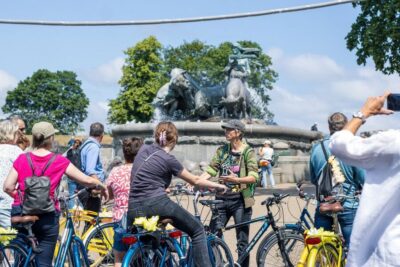
Highlights 3 Hour Bike Tour with a Local Guide
Read our review →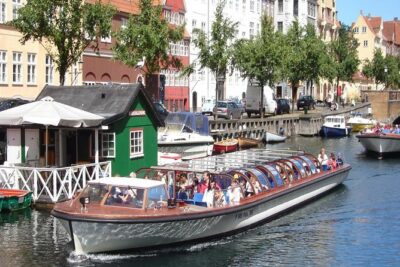
Copenhagen Sightseeing Classic Canal Tour With Live Guide
Read our review →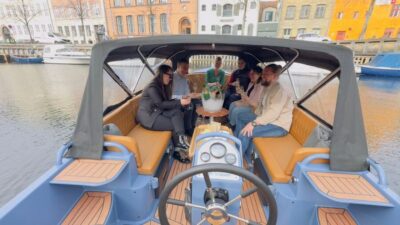
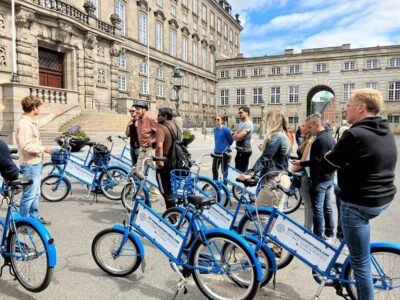
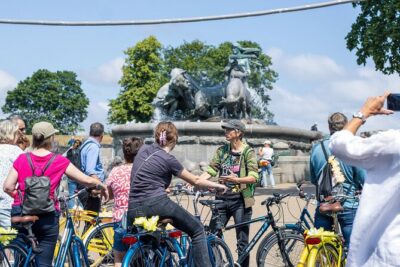
Copenhagen Highlights 3 Hour Bike Tour with local Guide
Read our review →