
Reviewed · COPENHAGEN
Life on Copenhagen’s Streets: Philip’s crazy life
Some city walks change how you see a place. This one uses central Copenhagen as the setting for Philip Larsen’s candid account of homelessness, drug abuse, crime, and the hard work of finding a way forward. I like the direct storytelling and the fact that the walk takes place in ordinary city streets rather than behind a museum display. I also like its small scale, with no more than 20 people, which gives you room to listen and ask questions.
The main consideration is its emotional weight. This is not a light sightseeing stroll, and Philip shares painful parts of his past with striking honesty. You also do not enter the Church of Our Lady, and the tour’s value depends far more on the guide’s personal story than on sightseeing stops alone.
In This Review
- Key points to know before you book
- What makes Philip’s walk different
- Starting at Nørreport Station, Copenhagen’s busiest transport hub
- The Church of Our Lady and the limits of the visit
- Gammeltorv, Copenhagen’s oldest square
- Studiestræde, where nightlife meets a harder reality
- Ending at Rådhuspladsen and the Metro
- What the $30.62 price includes in practical terms
- How the guide’s storytelling shapes the experience
- Who should book this walk?
- Group size, language, and accessibility
- Is Philip’s Copenhagen street walk worth it?
- FAQ
- Where does the tour begin?
- What time does the tour start?
- Where does the tour end?
- How long does the experience last?
- Is the tour offered in English?
- What places are included on the route?
- Do you enter the Church of Our Lady?
- How many people can join the tour?
- Are service animals allowed?
- Can I cancel for a full refund?
- What happens if the tour does not reach its minimum number of participants?
Key points to know before you book
- Philip Larsen tells a personal story: Expect a frank account of choices, addiction, homelessness, crime, and recovery, told in an open and reflective way.
- Five central Copenhagen stops: The route links Nørreport Station, the Church of Our Lady, Gammeltorv, Studiestræde, and Rådhuspladsen.
- A 90-minute walking format: Each listed stop lasts about 15 minutes, with the remaining time used for walking and conversation.
- A useful central finish: The walk ends beside the Rådhuspladsen Metro station, handy for continuing your day.
- English and mobile ticket: The experience is offered in English, and your ticket is delivered for mobile use.
- Best for thoughtful visitors: It suits adults, students, and anyone wanting social context rather than a standard city highlights tour.
What makes Philip’s walk different
Most Copenhagen walking tours focus on kings, colorful harbor buildings, design, food, or old churches. This one takes a more personal route. The city becomes a backdrop for Philip’s life, showing how familiar public places can look very different when viewed through hardship and exclusion.
Philip’s story includes a happy childhood, later choices that pushed his life toward the edge, drug abuse, homelessness, crime, and efforts to rebuild. The account is not presented as a polished success story with every problem neatly solved. That makes the walk more serious, but also more believable.
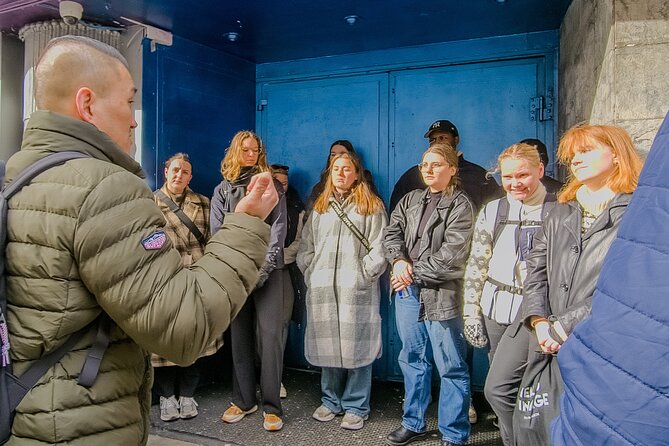
I would approach this experience as a conversation on foot. You will hear a life story, stop at prominent places, and have opportunities to ask questions. The strongest feedback describes Philip as a thoughtful, honest storyteller who answers questions openly and admits the parts of his past he is least proud of.
That honesty is the walk’s chief strength. It also explains why some people describe the experience as perspective-changing or inspiring. The point is not to watch someone else’s hardship from a safe distance. It is to consider how quickly ordinary life can change, and how important it is to ask for help before a crisis grows.
Other trips worth a look in Copenhagen:
- Copenhagen: Canal Cruise with Guide
★ 4.6 · 9,115 reviews - Copenhagen: Hop-On Hop-Off Bus Tour with Boat Tour Option
★ 3.9 · 4,122 reviews - Private Walking Grand Tour of Copenhagen
★ 5.0 · 3,953 reviews
Starting at Nørreport Station, Copenhagen’s busiest transport hub
Meet Philip at Nørreport Station, at Nørre Voldgade 82, 1358 København. The listed start time is 1:30 pm, so give yourself enough time to find the correct spot and arrive ready to begin.
Nørreport is described as Denmark’s busiest station, with about 250,000 daily passengers. That makes it a fitting starting point. You begin in a place defined by movement, transfers, and people going somewhere, while Philip’s story deals with periods when ordinary routes through life broke down.
There is no admission fee for this stop. The station is also easy to reach by public transportation, which matters in Copenhagen. You do not need to make your way to a distant suburb or a hard-to-find meeting point.
The practical drawback is that a major station can be confusing. Keep the exact address handy on your phone, and do not assume that simply arriving at the station means you have found the group. Since the experience has a maximum of 20 people, the group should remain manageable, but locating your guide still matters.
The Church of Our Lady and the limits of the visit
The second stop is the Church of Our Lady, or Vor Frue Kirke, Copenhagen’s Lutheran cathedral. You will hear about the church from outside, but you do not enter it.
That detail is important. If you are expecting an interior visit, architectural tour, or quiet look at the cathedral’s furnishings, this experience will not provide it. The church functions as one point on Philip’s route, not as a separate religious or art history visit.
The stop lasts about 15 minutes and has no included admission ticket. I see value in the outside setting because the tour keeps moving through real public spaces. You are not switching between unrelated attractions. Each place supports the larger conversation about life in central Copenhagen.
Still, keep your expectations clear. This is a storytelling stop beside a cathedral, not a cathedral tour. If you want to explore inside, plan that separately.
Gammeltorv, Copenhagen’s oldest square
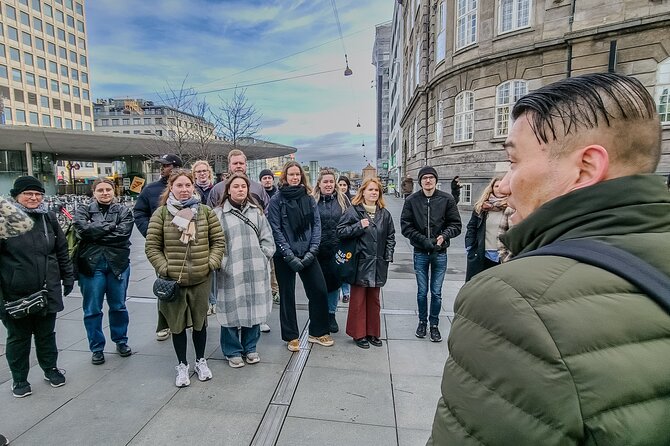
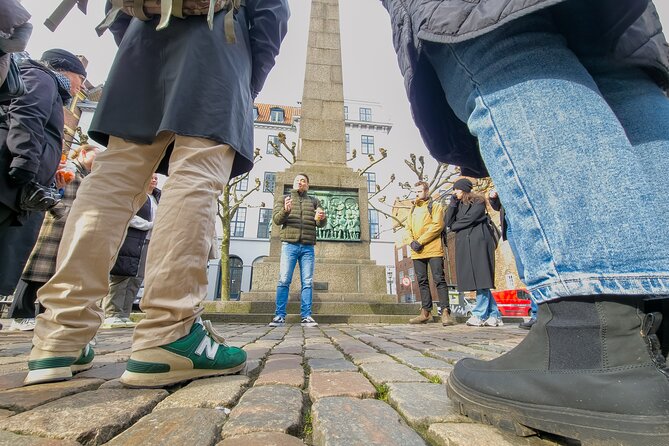
Gammeltorv means the Old Square, and it is described as Copenhagen’s oldest square. It gives the walk a strong contrast: an historic civic space paired with a very modern personal story.
The stop lasts about 15 minutes and is free to visit. You can expect Philip to pause here and continue the account of his life, linking the surroundings to experiences in Copenhagen’s center. The value is less about a long list of dates and more about hearing how someone can live on the margins while moving through spaces used by everyone else.
Gammeltorv is also a useful point for understanding the tour’s method. The walk does not take you away from the center to show a special case in isolation. Instead, it places a difficult social subject beside well-known public landmarks. You remain in the middle of Copenhagen, where everyday prosperity and private struggle can exist only a short distance apart.
That contrast can feel uncomfortable. It should. This is one reason I would not book the tour simply to fill an hour between attractions. You need to be willing to listen carefully and sit with subjects that may not have easy answers.
A completely different kind of day out:
- From Copenhagen: Lund and Malmö 2-Country Tour
★ 4.7 · 2,772 reviews - Copenhagen Highlights Walking Tour
★ 5.0 · 2,324 reviews - Copenhagen: Highlights 3 Hour Bike Tour with a Local Guide
★ 4.8 · 2,312 reviews - Hamlet and Sweden Tour – Two Countries in one day !
★ 5.0 · 2,223 reviews
Studiestræde, where nightlife meets a harder reality
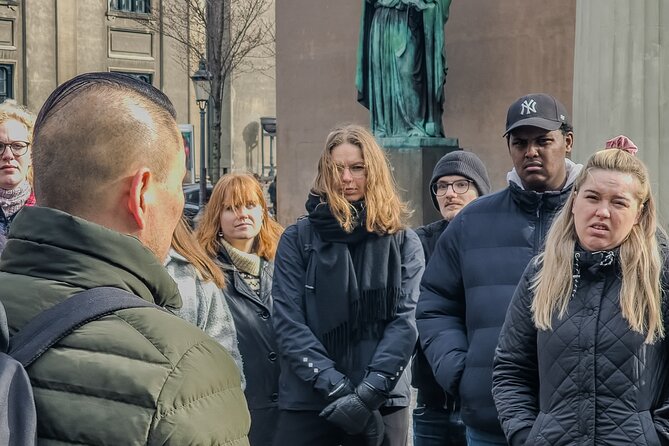
Studiestræde runs through the heart of Copenhagen and is lined with shops, cafés, bars, clubs, and restaurants. It is a street associated with social life and evening entertainment, which gives Philip’s story another sharp setting.
The listed stop lasts about 15 minutes and is free. Here, the route is likely to feel particularly connected to daily city life. You are not standing at a remote memorial or a formal institution. You are beside places where people eat, meet friends, go out, and spend money.
That setting makes the walk useful for anyone who wants a more honest view of a capital city. Copenhagen is often praised for comfort, design, and quality of life, but Philip’s account reminds you that a city’s polished surface does not tell the whole story.
The supplied feedback gives a clear sense of the tone at this point in the walk. Philip is described as a strong storyteller who presents his past in a vivid and present way. He also stresses the need to reach out for help. That combination matters. The story includes frightening and sad periods, but it is not told without hope.
Studiestræde may be lively around you. The group may need to pause close together and listen over ordinary city noise. That is part of the experience, not a flaw in the design, but people who want a quiet indoor setting should know what they are booking.
Ending at Rådhuspladsen and the Metro
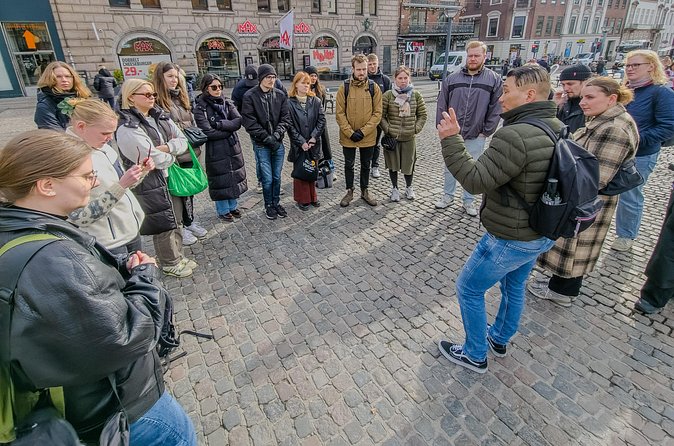
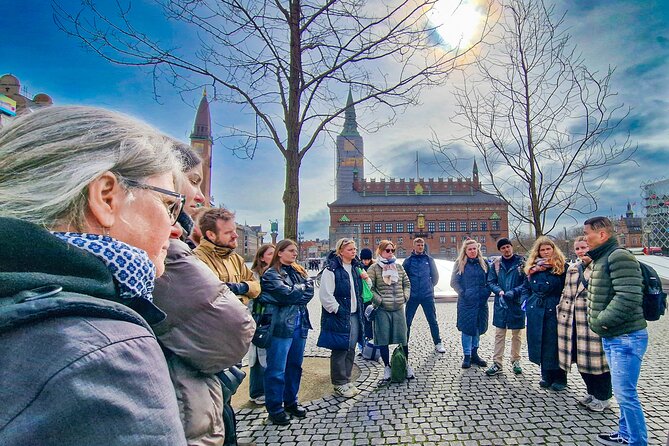
The final stop is Rådhuspladsen, Copenhagen’s City Hall Square. The square is one of the city’s best-known public spaces, with Copenhagen City Hall dominating the view. The building dates from the early 20th century and gives the walk a clear, central finish.
The tour ends at Rådhuspladsen 1599 Copenhagen, beside the Metro station. This is one of the most practical parts of the route. You can continue sightseeing, return to your accommodation, or connect to another part of the city without arranging a separate pickup.
The scheduled duration is about 1 hour 30 minutes. Each of the five stops is assigned about 15 minutes, which totals 75 minutes. The rest allows for walking between locations and discussion. One account describes a walk that lasted about two hours instead of the planned 90 minutes, so you may want to avoid booking a tight appointment immediately afterward.
That extra time is not guaranteed, but it shows how the format can expand when questions and conversation take hold. If you need to be somewhere at a fixed time, leave a generous buffer.
What the $30.62 price includes in practical terms
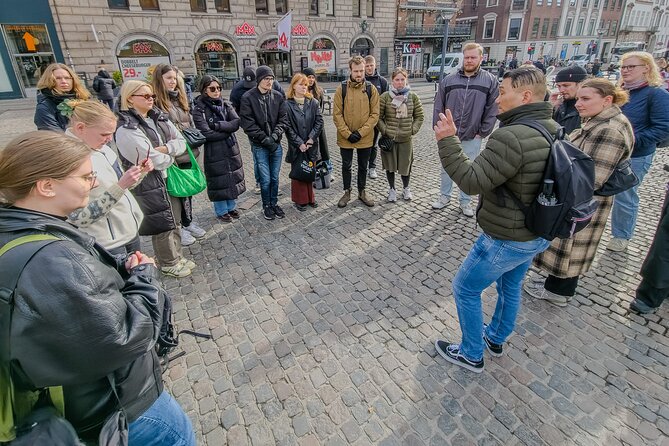
At $30.62 per person, this is not an attraction ticket package. There is no major entry fee included, and you do not pay for access to a collection of historic interiors. You are paying for Philip’s time, personal account, and guided conversation across central Copenhagen.
I think that price can be fair if you value first-person storytelling and social insight. It is less attractive if you measure value by the number of famous buildings you enter. A conventional sightseeing tour may cover more monuments, while this walk offers a more focused human story.
The free outdoor stops help keep the cost straightforward. There are no listed extra admission charges along the route, and the church is specifically visited from outside. You should still budget separately for any coffee or food you choose to buy, as those are not part of the experience.
The strongest value comes when you participate. Listen closely, ask respectful questions, and allow the story to challenge your assumptions. If you simply want to take photos while someone talks, you will miss the reason this tour costs more than a casual stroll through the same streets.
How the guide’s storytelling shapes the experience
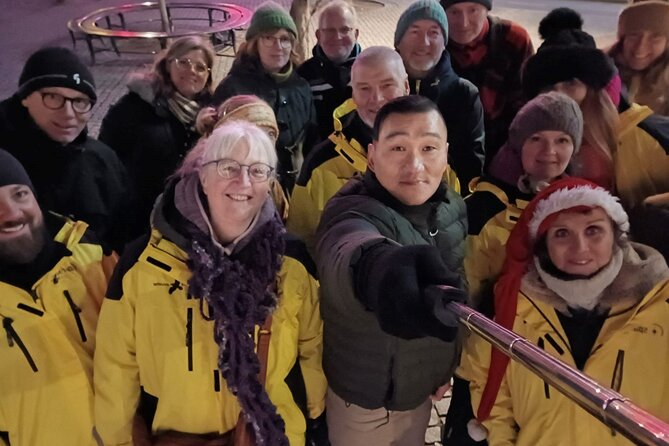
The feedback about Philip is unusually consistent in a few areas. He is praised for being open, reflective, and comfortable with questions. His story is described as educational, moving, gripping, and thought-provoking.
Several comments also point to the way he handles responsibility. Philip does not present himself only as a victim of events. He talks about his choices and the consequences, including parts of his life he finds difficult to discuss. That gives the experience moral weight without turning it into a lecture.
The story also includes hope. Philip emphasizes that asking for help matters, and that a person can begin to rise even after reaching a very dark point. You should not expect a tidy ending, but you can expect a message about change and the need for support.
Some feedback refers to other Street Voices guides, including Christian and Bertram, rather than Philip. That suggests the wider program may include several personal storytellers. For this particular experience, the supplied details identify Philip as the guide, so confirm the guide name if that matters to your booking.
Who should book this walk?
I would recommend it most strongly to:
- Adults interested in social issues and real personal accounts
- Students and school groups who can discuss difficult topics respectfully
- People who have already seen Copenhagen’s main sights and want another angle
- Visitors who prefer conversation and reflection over a standard sightseeing script
- Anyone curious about homelessness, addiction, crime, and recovery
The format has worked well for student groups according to the supplied feedback. One account describes the combination of walking, stopping, and narration as especially effective. The 90-minute length is also manageable for many groups, though the emotional content may call for discussion afterward.
I would be more cautious about booking it for young children or for anyone seeking a cheerful introduction to Copenhagen. The tour covers drug abuse, homelessness, crime, and personal pain. The data says most participants can take part, but it does not give a specific minimum age, so you should use your own judgment and ask the provider if age is important for your group.
Group size, language, and accessibility
The maximum group size is 20 people. That is a useful limit for a story-led walk because a very large crowd would make questions and personal contact harder. It is still a group experience, not a private tour, so do not expect uninterrupted one-to-one time with Philip.
The tour is offered in English and uses a mobile ticket. It begins near public transportation and ends next to the Rådhuspladsen Metro station. Service animals are allowed, and the description says most people can participate.
The route includes outdoor walking and several stops in central streets and squares. Specific details about step-free access, seating, restrooms, or the walking surface are not provided. If you have mobility needs, contact Gadens Stemmer before booking rather than assuming the central location guarantees full accessibility.
Free cancellation is available if you cancel at least 24 hours before the local start time. Changes or cancellations inside that window are not accepted for a refund. The experience also requires a minimum number of participants, so if that minimum is not met, you will be offered another date or experience, or a full refund.
Is Philip’s Copenhagen street walk worth it?
Book this tour if you want Copenhagen to feel more human and less polished. Philip’s account offers a serious look at how addiction, homelessness, crime, and difficult choices can affect a life, while still leaving room for responsibility, help, and hope.
Skip it if you want a traditional city tour, cathedral interior, or a fast list of landmarks. The sights are mainly outdoor stopping points, and the real subject is Philip’s story.
For the right person, $30.62 is a reasonable price for 90 minutes of direct, personal storytelling in the city center. Arrive at Nørreport ready to listen, leave extra time after the scheduled finish, and treat the conversation with care. This is not a sightseeing checklist. It is a chance to see familiar Copenhagen streets through a much harder, more personal lens.
FAQ
Where does the tour begin?
The tour begins at Nørreport Station, at Nørre Voldgade 82, 1358 København, Denmark.
What time does the tour start?
The listed start time is 1:30 pm.
Where does the tour end?
It ends at Rådhuspladsen, beside the Metro station at Town Hall Square.
How long does the experience last?
The scheduled duration is approximately 1 hour 30 minutes.
Is the tour offered in English?
Yes. The experience is offered in English.
What places are included on the route?
The route includes Nørreport Station, the Church of Our Lady, Gammeltorv, Studiestræde, and Rådhuspladsen.
Do you enter the Church of Our Lady?
No. The church is visited from outside, and admission is not included.
How many people can join the tour?
The maximum group size is 20 participants.
Are service animals allowed?
Yes. Service animals are allowed.
Can I cancel for a full refund?
Yes, if you cancel at least 24 hours before the experience’s local start time. Cancellations made later are not refunded.
What happens if the tour does not reach its minimum number of participants?
You will be offered a different date or experience, or a full refund if the experience is canceled because the minimum is not met.
Just added in Copenhagen
- WWII Copenhagen Nyhavn and War Museum Private Walking Tour★ 5.0 · 2 reviews
- a day at North Zealand Castle Tour★ 4.5 · 19 reviews
- Copenhagen Walking Tour with Food Testing (smorrebrod dish & snap)★ 4.5 · 10 reviews
- World-class street football experience in Copenhagen★ 5.0 · 1 review
- walking tour – Copenhagen and Christiansborg 3 hours★ 4.0 · 7 reviews
- Stevns Klint UNESCO World Heritage Site Tour from Copenhagen★ 5.0 · 1 review
- The Philosopher’s Last Walk: An audio tour on the life of Søren Kierkegaard★ 4.5 · 5 reviews
- The Six Forgotten Giants Trolls Hunt with Minibus★ 4.5 · 27 reviews