
Reviewed · DENMARK
Denmark Data eSIM 0.5GB daily to 50GB 30 Days
A better trip starts with working data. This Denmark eSIM gives you mobile internet without a shop visit, plastic SIM card, or monthly contract, and the QR code usually arrives within minutes. I like the quick digital setup and the fact that mobile hotspot is supported, which helps when you need to connect a laptop or a second device. The main catch is that the plan starts as soon as you install it, so a premature scan can waste part of your 30-day window.
The $3.18 starting price is appealing, especially for a short visit or light data use. I also like the choice between daily plans from 0.5GB and fixed plans up to 50GB, though you must check your phone carefully before paying because compatibility problems and itinerary changes are not refundable.
In This Review
- Key points to know before you buy
- This is a data tool, not a sightseeing tour
- How the Denmark eSIM works
- Device compatibility deserves careful attention
- Choosing between daily and fixed data plans
- What 128 kbps really means for your trip
- Network access in Denmark
- Hotspot support adds real value
- No phone number, calls, or SMS
- The $3.18 starting price and overall value
- Support can matter when setup goes wrong
- Who should choose this Denmark eSIM?
- Six practical steps before you install it
- Should you book it?
- FAQ
- How quickly will I receive the eSIM QR code?
- When does the eSIM validity period begin?
- How long can the Denmark eSIM be used?
- Does the eSIM include calls or SMS?
- Can I use the eSIM as a mobile hotspot?
- What happens after I use the high-speed data allowance?
Key points to know before you buy

- The QR code arrives within minutes, making this useful for last-minute trip preparation.
- Installation starts the validity period immediately, so wait until you are ready to use the plan.
- Daily plans reset every 24 hours, while fixed plans use one total high-speed allowance.
- High-speed data becomes 128 kbps afterward, enough mainly for messaging apps and very light browsing.
- Hotspot use is supported, but the service does not provide a phone number, voice calls, or SMS.
- Denmark uses the TDC network, with 4G LTE or 5G speeds depending on local availability.
This is a data tool, not a sightseeing tour
The name may sound like an activity you join at a meeting point, but this experience is a digital mobile-data service. There is no guide, vehicle, attraction entry, or route through Denmark. The stated start point is Denmark, and the service ends back at that same general point because the real activity is connecting your phone to a local mobile network.
That distinction matters. You will not receive help finding a museum, choosing a restaurant, or planning a day in Copenhagen. What you get is internet access for maps, translation, messages, online tickets, ride information, email, and other phone-based needs.
For many visitors, that is exactly the point. I would rather have a simple connection ready when I arrive than spend the first hour looking for a SIM shop or trying to explain a data plan at an airport counter.
Other trips worth a look in Denmark:
- Copenhagen: Canal Cruise with Guide
★ 4.6 · 9,115 reviews - Copenhagen: Hop-On Hop-Off Bus Tour with Boat Tour Option
★ 3.9 · 4,122 reviews - Private Walking Grand Tour of Copenhagen
★ 5.0 · 3,953 reviews
How the Denmark eSIM works

An eSIM is a digital SIM built into your phone. Instead of inserting a small plastic card, you scan a QR code and add a mobile plan in your phone’s settings. The QR code is sent by email, reportedly within minutes of booking.
You need three things before you begin:
- An eSIM-compatible phone
- A device that is not locked to another carrier
- A confirmed travel plan, since cancellations and refunds are not available for compatibility issues or itinerary changes
The setup itself is meant to be simple: open your phone’s mobile or cellular settings, choose the option to add an eSIM, scan the supplied QR code, and follow the prompts. Exact menu names vary by phone model, so the broad process is clear even though the supplied information does not give model-specific instructions.
My most important tip is to install it at the right time. The validity period begins immediately when the eSIM is installed, not when you first use mobile data in Denmark. You must also start using it within one month of purchase. If you buy it weeks before departure, do not scan the code just to test it unless you are willing to begin the plan.
Device compatibility deserves careful attention
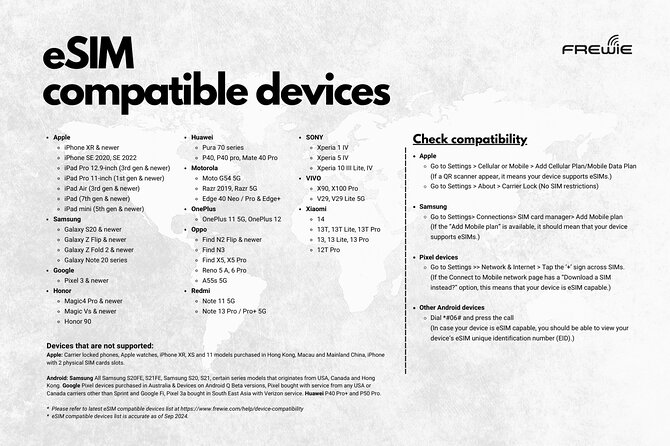
This is the part you should check before purchase. Your phone must support eSIM and must not be carrier locked. A phone can be fairly new and still lack eSIM support, or it may support eSIM but remain locked by the network that sold it.
The information specifically warns that most devices bought in China and Hong Kong do not support eSIM. That is not a minor footnote. If your phone came from one of those markets, check the exact model online or contact your service provider before paying.
A compatible phone is only part of the setup. If it is locked, the digital plan may not work even if the handset has the right hardware. Since this product is non-refundable, checking first is much cheaper than fixing the problem after arrival.
Choosing between daily and fixed data plans
The available range runs from 0.5GB daily plans to fixed plans as large as 50GB for up to 30 days. The right choice depends on how you use your phone, not simply how long you stay.
A 0.5GB daily plan can suit light use. You might use it for maps, short searches, messages, and occasional email. It is less suited to frequent video, long social media sessions, large photo uploads, or using your phone as a regular work connection.
Daily plans reset every 24 hours. Once the high-speed allowance for that period is used, data continues at 128 kbps. That fallback speed is described as suitable for messaging apps. You should not expect a comfortable experience for streaming, image-heavy websites, large downloads, or constant navigation after the high-speed allowance is gone.
Fixed plans work differently. You receive one total high-speed allowance, with options reaching 50GB. Once that amount is used, the connection continues at 128 kbps for the remainder of the plan. A fixed plan can be easier to manage if your usage changes from day to day. You might use very little one day and much more the next without worrying about a daily reset.
The tradeoff is simple. Daily plans give you a fresh allowance every 24 hours, while fixed plans give you more control over when you use the data. I would choose daily for predictable, moderate use and fixed for heavier or less predictable use.
A completely different kind of day out:
- From Copenhagen: Lund and Malmö 2-Country Tour
★ 4.7 · 2,772 reviews - Copenhagen Highlights Walking Tour
★ 5.0 · 2,324 reviews - Copenhagen: Highlights 3 Hour Bike Tour with a Local Guide
★ 4.8 · 2,312 reviews - Hamlet and Sweden Tour – Two Countries in one day !
★ 5.0 · 2,223 reviews
What 128 kbps really means for your trip

The phrase unlimited prepaid data sounds generous, but you should read the speed limit carefully. The high-speed allowance is not unlimited. Unlimited access continues after that allowance only at 128 kbps.
At that reduced speed, basic text messaging may continue to work. Simple communication through messaging apps is the intended use. You may also manage very light online tasks, though performance can vary.
Do not treat the reduced-speed service as a replacement for full-speed data. Video calls, streaming, cloud backups, large attachments, image-heavy pages, and major app updates can become frustrating or fail to load. I suggest turning off automatic app updates and photo backups while using mobile data if you are trying to preserve your high-speed allowance.
You can also download what you need before leaving home, including offline maps and important documents. The supplied details do not promise offline map support, but using offline content is a sensible way to reduce data use and protect your allowance.
Network access in Denmark

The Denmark connection uses TDC, with 4G LTE or 5G depending on availability. That gives you access to a major local network rather than an unspecified roaming connection.
Actual speed and coverage can still vary. Your phone, location, network traffic, and local availability all affect performance. The service does not promise 5G everywhere, so think of 5G as a possible benefit rather than a guarantee.
For normal trip tasks, network access is useful from the moment you need directions, an online reservation, translation help, or a message home. If you move beyond Denmark, the wider coverage list may matter. It includes many European countries, along with the United States, Australia, and New Zealand. It also lists coverage at major airport hubs in places such as Singapore, Japan, South Korea, India, Malaysia, and the United Arab Emirates.
The exact coverage partners vary by country. Denmark is listed with TDC. If your plans include several countries, check the named country and network before assuming the eSIM will work everywhere you go.
Hotspot support adds real value
Mobile hotspot is supported, which is one of the more useful features here. You can potentially share the connection with a laptop, tablet, or another device instead of buying a separate data plan for each one.
Hotspot use can consume data quickly, especially with video, system updates, file transfers, or automatic backups. A 0.5GB daily allowance may disappear fast if several devices are connected. The 50GB fixed option gives a heavier user more room, but even that amount is not endless if you use the phone as a full-time home internet replacement.
I see hotspot support as a practical backup rather than an invitation to stream all day. It is ideal when you need to send a work email from a laptop, connect a tablet briefly, or help another device get online.
No phone number, calls, or SMS
This eSIM is data only. It does not provide a local phone number, and it cannot make ordinary cellular calls or send standard SMS messages.
That does not prevent communication through internet services, provided the app you use works with data. Messaging apps can continue operating through the mobile connection, especially within the reduced-speed allowance described for the plan.
You should still keep another method for important calls if you need one. The supplied information does not include voice service, SMS access, or a calling bundle. If a hotel, airline, or service requires a traditional phone number, this eSIM will not fill that role.
The $3.18 starting price and overall value
The advertised starting price is $3.18 per person, but the full range includes different amounts of data, so the exact cost depends on the plan you select. At the low end, the price is attractive for simple connectivity. It can save you the time and hassle of finding a local SIM after landing.
Value depends on how much high-speed data you need. A light phone user may get excellent value from a small daily allowance. Someone using hotspot regularly, uploading photos, or watching video should compare the selected allowance carefully before deciding.
The one-time prepaid format is another plus. There are no auto-renewals and no contract to cancel later. You pay for a set package, use it during the stated period, and avoid the surprise of a continuing monthly charge.
The weak point is the strict purchase commitment. There are no refunds or changes if your phone is incompatible or your travel plans shift. That makes the low price less appealing if you have not confirmed your device and dates.
Support can matter when setup goes wrong
The supplier is Frewie, and assistance is available by responding to the supplier’s email. Support is also offered through Viator chat or email at [email protected].
One customer reported that support responded quickly through chat and described the service as convenient and effective. That is encouraging because eSIM setup can feel confusing when you are standing in an airport with a QR code, two SIM profiles, and a phone menu that uses unfamiliar wording.
Still, support should be treated as backup, not a substitute for preparation. Check compatibility first, keep the QR code accessible, and install the eSIM while you have a reliable Wi-Fi connection. Those steps reduce the chance that a technical question becomes an arrival-day problem.
Who should choose this Denmark eSIM?
I think this suits you best if you want a quick, prepaid connection for maps, messages, searches, and basic trip planning. It also suits you if you dislike changing physical SIM cards or want to keep your regular SIM available for other purposes.
It is especially useful for:
- Short visits with light or moderate data use
- Visitors who need hotspot access
- People arriving when shops may be closed
- Visitors making a multi-country trip covered by the listed networks
- Anyone who wants to avoid auto-renewals and contracts
I would be more cautious if you need voice calls, SMS, heavy streaming, constant laptop use, or guaranteed high-speed data after your allowance runs out. I would also avoid buying it until I had checked the exact phone model and carrier-lock status.
Six practical steps before you install it
First, confirm that your phone supports eSIM. Do not rely only on the phone’s age or price. Check the exact model and contact your service provider if you are unsure.
Second, confirm that the phone is unlocked. An eSIM-compatible handset can still reject a plan if it is tied to another carrier.
Third, choose daily or fixed data based on your actual habits. Think about maps, photos, video, hotspot use, and work rather than choosing the cheapest figure automatically.
Fourth, keep the QR code in an accessible email account or saved document. You need to scan it during installation.
Fifth, install only when you are ready. The plan begins immediately after installation and must be used within one month of purchase.
Sixth, remember that the service is data only. Keep your normal phone arrangement if you need standard calls or SMS.
Should you book it?
Book this Denmark eSIM if your phone is confirmed compatible, your travel dates are firm, and your main need is affordable mobile data. The fast QR-code delivery, TDC network access, hotspot support, and prepaid structure make it a practical choice, and the $3.18 starting price can be good value for light use.
Skip it if you need a phone number, have not checked your device, or want the freedom to cancel after purchase. The smart approach is to verify compatibility first, select the data style that matches your habits, and wait to install until your trip is ready to begin.
FAQ
How quickly will I receive the eSIM QR code?
The QR code is normally sent within minutes of booking.
When does the eSIM validity period begin?
Validity begins immediately when you install the eSIM by scanning the QR code.
How long can the Denmark eSIM be used?
The plan is available for approximately 30 days, depending on the option selected. You must start using it within one month of purchase.
Does the eSIM include calls or SMS?
No. It is a data-only eSIM and does not include a phone number for voice calls or standard SMS messages.
Can I use the eSIM as a mobile hotspot?
Yes. Mobile hotspot use is supported.
What happens after I use the high-speed data allowance?
Daily plans reset every 24 hours. Fixed plans continue after the selected allowance is used. In both cases, data continues at a reduced speed of 128 kbps, intended mainly for messaging apps.
Just added in Denmark
- Understanding Klaksvík: A Self-guided city tour in KlaksvÍk★ 5.0 · 3 reviews
- WWII Copenhagen Nyhavn and War Museum Private Walking Tour★ 5.0 · 2 reviews
- Helsingør Historical Treasures: A Walking Tour★ 5.0 · 1 review
- SUP – Stand Up Paddle – Kitesurfing – Wingfoil & Kitefoil courses★ 5.0 · 14 reviews
- E Biking Adventure to Kronborg Castle★ 5.0 · 3 reviews
- E-biking Fredensborg & Kronborg (OPT Louisiana Museum)★ 5.0 · 2 reviews
- a day at North Zealand Castle Tour★ 4.5 · 19 reviews
- Climbing and events★ 4.5 · 10 reviews